



Chronic headaches, particularly migraines, disrupt everyday activities and overall well-being, significantly reducing quality of life.
Chronic headaches, particularly migraines, significantly impair individuals’ quality of life by disrupting daily activities and overall well-being. While traditional medications can be effective, they may not work for everyone and often have undesirable side effects. Botulinum toxin type A (Botox) has emerged as a novel treatment for chronic headaches, particularly migraines. This article explores the mechanism, effectiveness, and procedure of using Botox injections in the corrugator supercilii muscle to alleviate headache symptoms.
Understanding Chronic Headaches and Migraines
Chronic headaches are defined as occurring 15 or more days per month for over three months. A common subtype of headaches is migraines, which feature intense, throbbing pain along with nausea, vomiting, and sensitivity to light and sound. There are many ways that neuronal, vascular, and inflammatory pathways interact in migraines. The trigeminovascular system, cortical spreading depression, and neurogenic inflammation are some of the most important ones.
Mechanisms of Botox in Headache Treatment
The bacterium Clostridium botulinum is responsible for producing botulinum toxin type A. It temporarily paralyzes muscles by stopping the release of acetylcholine at the neuromuscular junction. In headache treatment, Botox’s effectiveness is attributed to its influence on peripheral and central sensitization mechanisms involved in chronic pain.
- Peripheral Sensory Modulation: By paralyzing muscles linked to tension and pain pathways, Botox reduces peripheral nociceptive inputs.
- Central Sensitization Reduction: Chronic headaches often cause central sensitization, where the central nervous system becomes hyper-responsive to stimuli. Botox may help mitigate this process.
- Inhibition of Neurogenic Inflammation: Botox decreases the release of pro-inflammatory neuropeptides, like calcitonin gene-related peptide (CGRP), involved in migraine pathophysiology.
Targeting the Corrugator Muscle
The corrugator supercilii muscle, located at the medial end of the eyebrow, plays a significant role in frowning and is implicated in tension-type headaches and migraines. Overactivity of this muscle can contribute to headache pain.
Anatomy and Function
- Origin and Insertion: The corrugator muscle originates from the medial end of the superciliary arch and inserts into the forehead skin near the eyebrow.
- Function: Its primary function is to draw the eyebrow downward and medially, creating vertical forehead wrinkles. It is innervated by the facial nerve (cranial nerve VII), specifically its temporal branch.
Botox Injection Procedure
Patient Selection and Pre-Treatment Assessment
- Ideal Candidates: Individuals with chronic migraines or tension-type headaches unresponsive to conventional treatments.
- Medical History and Physical Examination: Focus on headache frequency, duration, triggers, and associated symptoms. A thorough neurological exam should rule out secondary causes.
- Headache Documentation: Patients may keep a headache diary to track frequency, intensity, duration, and triggers.
Injection Technique
Performed by a trained healthcare professional experienced in headache management and facial anatomy.
1. Preparation
- Informed Consent: Explain the procedure, potential risks, benefits, and alternatives. Obtain informed consent.
- Aseptic Technique: Maintain proper aseptic technique to minimize infection risk.
2. Injection Procedure
- Patient Positioning: Position the patient comfortably, usually semi-reclined or supine.
- Muscle Localization: Identify the corrugator muscle by asking the patient to frown or squint.
- Injection Sites: Typically, 2-3 sites are selected along the muscle’s length.
- Dosage: 5 to 10 units per side, based on muscle size and patient response.
- Technique: Use a fine gauge needle (30-32 gauge) to inject Botox intramuscularly, avoiding intravascular injection.
3. Post-Injection Care and Follow-Up
- Immediate Post-Care: Advise against rubbing or massaging injection sites for 24 hours to prevent toxin migration.
- Activity Restrictions: Avoid strenuous activity, lying down, or bending over for a few hours post-injection.
- Follow-Up: Schedule follow-up in 4-6 weeks to assess effectiveness and plan potential repeat injections.
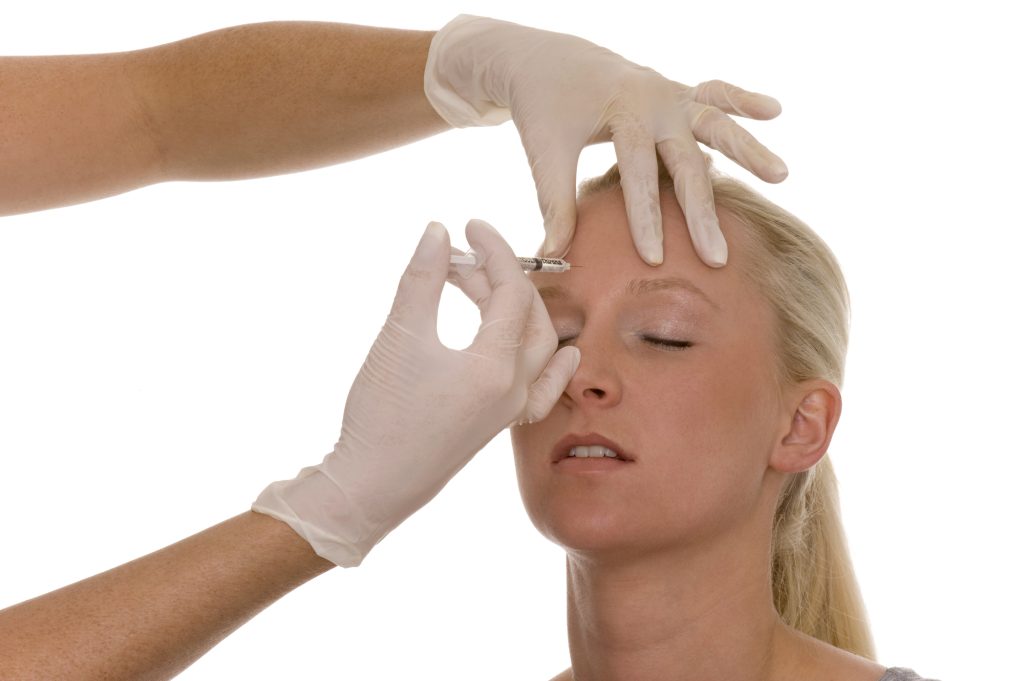
Injecting Botox into the corrugator muscle shows great potential as a treatment for chronic headaches, particularly migraines.
Efficacy and Safety
Clinical Evidence
- PREEMPT Trials: The Phase III Research Evaluating Migraine Prophylaxis Therapy (PREEMPT) clinical program demonstrated Botox’s efficacy in reducing headache days and improving quality of life in chronic migraine patients.
- Long-Term Studies: Indicate sustained benefits with repeated treatments, with many patients experiencing significant reductions in headache frequency and intensity over time.
Safety Profile
- Common Side Effects: Localized pain, swelling, bruising at injection sites, and transient headache.
- Rare but Serious Side Effects: Ptosis (drooping of the eyelid), diplopia (double vision), and allergic reactions, often related to improper technique or dosing.
Mechanisms of Action in Headache Relief
Botox alleviates headaches by inhibiting acetylcholine release, causing muscle relaxation, and reducing muscle tension and pain signals to the brain. Also, it changes the release of neuropeptides and neurotransmitters that are involved in pain pathways, like substance P and CGRP. This lowers neurogenic inflammation and central sensitization.
Patient Outcomes and Satisfaction
Patients often report significant improvements in headache frequency, intensity, and overall quality of life, with high satisfaction rates, especially among those unresponsive to other therapies.
- Quality of Life: Reduced headache frequency and severity lead to better daily functioning, less absenteeism, and improved social interactions.
- Psychological Benefits: Chronic pain relief can improve mood, reduce anxiety and depression, and enhance overall mental health.
Conclusion
Botox injections in the corrugator muscle offer a promising treatment for chronic headaches, especially migraines. With a multifaceted mechanism of action targeting both peripheral and central pain pathways, Botox provides relief for those unresponsive to conventional therapies. Proper patient selection, meticulous injection technique, and regular follow-up are essential for optimal outcomes and minimal side effects. As clinical experience and research continue to evolve, Botox is likely to remain a valuable tool in headache management, significantly improving patients’ quality of life and overall well-being.
